On the day I first changed to the 120Hz monitor, I felt that the whole world had become smoother. The cursors floats smoothly on the screen, and the afterglow of web page scrolling can no longer be seen, and even the simple window dragging becomes pleasing to the eye. But when I tried my friend’s 240Hz monitor, the subtle sense of speed made me fall into meditation: is 120Hz really enough?
There is no standard answer to this question, just like some people think that a 60-frame movie is very smooth, while others have to have 120 frames to be comfortable. We invited three players from different levels to do an interesting test. _League of Legends_ gold level player Jack said that 120Hz and 240Hz were no different for him. After all, his reaction speed was not as fast as the monitor. However, professional FPS player Sean can accurately distinguish the delay difference of 0.2 milliseconds. For him, 240Hz is the pass line.
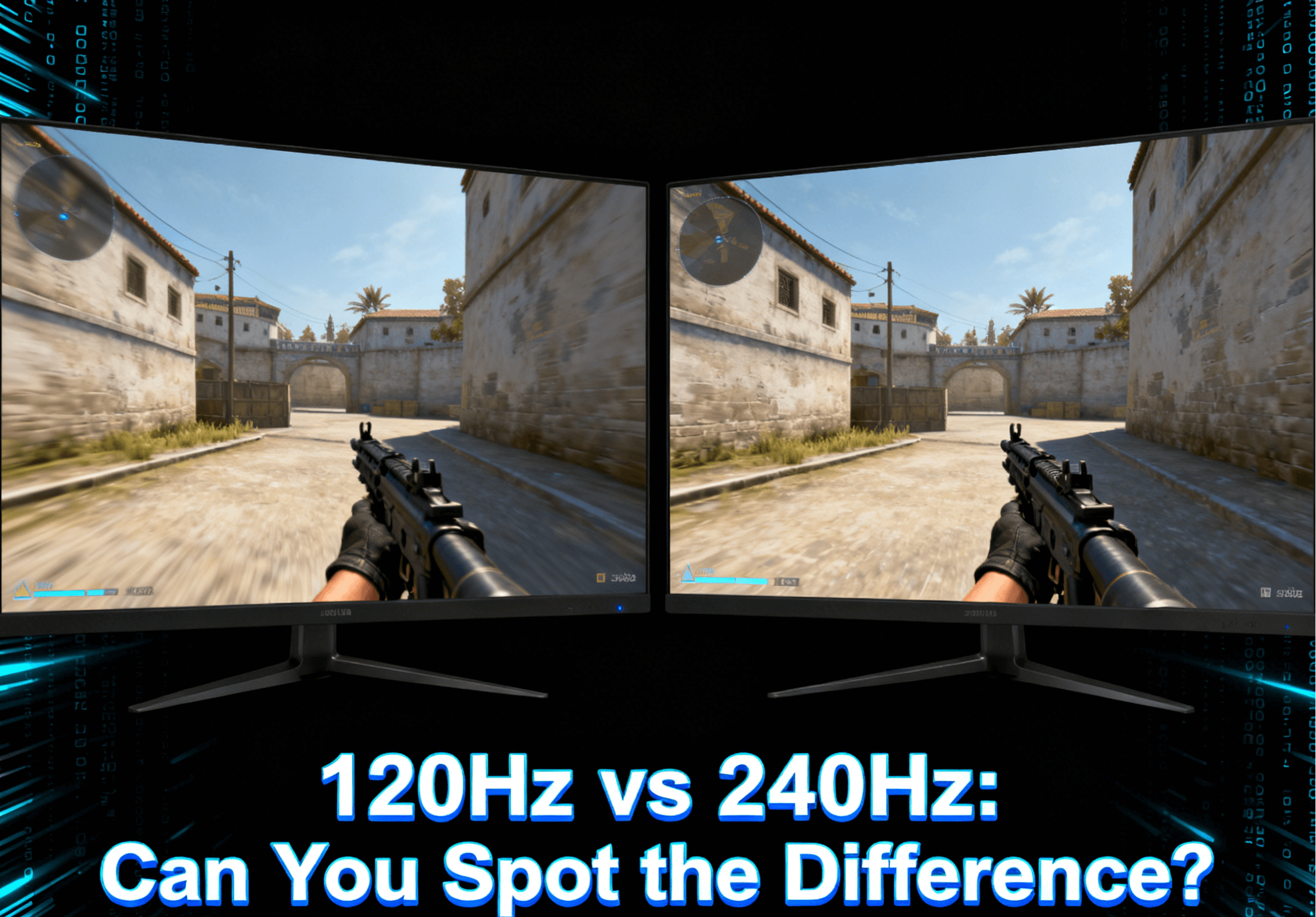
The refresh rate is just the beginning of the story. When you suddenly turn around in the game, the response speed of the monitor is the key. A good IPS screen is like an agile partner, which can respond to every instruction immediately; while a cheap VA screen may allow you to see the shadow at the critical moment. It’s like driving. It’s not the maximum speed that determines everything, but the stability when turning.
The current display market is dazzling. Some are under the banner of “e-sports exclusive”, but the parameters are very ordinary; some seem simple, but they hide unexpected surprises. After testing more than 20 monitors, we found that what really determines the experience is often not the most conspicuous parameters, but the details that are easily ignored.
For example, a player bought a very expensive 4K 144Hz monitor, but the graphics card didn’t work at all. Some people chose an oversized screen, but found that they couldn’t see the whole screen at all when playing FPS. The most ridiculous thing is that some people spend a lot of money to pursue 1ms response time, but because of the over-driven ghost effect, it affects the performance.
In the end, the monitor and your entire game equipment need to be put on a door-to-door. If you use a mid-end graphics card three years ago, maybe 144Hz is more practical than 240Hz. If your main job is retouching, color performance may be more important than refresh rate. Just like choosing shoes, it is more important to fit your feet than to look good.
After a month of testing, we came to an interesting conclusion: for most players, 120Hz is enough, but 240Hz can give you more confidence. It’s like driving. The 1.6L displacement is enough for daily use, but the 2.0T can always give you a more calm experience. The important thing is not to let the monitor become the weakest link in your equipment.
Now open the shopping website, and you will find that there are heart-warming choices for each price range between 120Hz and 360Hz. Remember, the best is not necessarily the most expensive, but the most suitable for you. How many frames can your graphics card run? What kind of games do you usually play? How much space does your desktop have? The answers to these questions are more important than any evaluation.
What refresh rate monitor are you using? How do you feel? Welcome to share your experience in the comment section. Maybe your experience can help another indecisive player.